Image


Spring
3 units
Only one application needs to be completed for all courses desired during the quarter.
03/27/2026
This is the third course in the biostatistics methods sequence, covering multi-predictor variable methods in the context of survival analysis and repeated measures analysis. Emphasis is on the practical and proper use of statistical methodology and its interpretation. The statistics package STATA will be used throughout the course.
The objectives for this course are for participants to:
Designing Clinical Research (EPI 202) and Biostatistical Methods II (BIOSTAT 208). Exceptions to these prerequisites may be made with the consent of the Course Director, space permitting.
Lectures: 90 minutes, held once a week. Lecture recordings will be available online later in the day.
Labs: 2 hours, held once a week.
Homework Review Sessions
Project Presentations
The syllabus for the quarter shows dates and times for all activities.
Grades will be based on 5 homework assignments (65%), 6 quizzes (5%, due at 5 p.m. after each lab session), and a data analysis project (30%). Late work is not accepted.
Students not in full-year DEB Education Programs who satisfactorily pass all course requirements will, upon request, receive a Certificate of Course Completion.
Only UCSF students (defined as individuals enrolled in UCSF degree or certificate programs) will receive academic credit for courses. Official transcripts are available to UCSF students only. A Certificate of Course Completion will be available upon request to individuals who are not UCSF students and satisfactorily pass all course requirements.
For UC-Affiliated learners, the course fee is $3,300
For Non-UC-Affiliated learners, the course fee is $4,800
UC-Affiliation: Concurrent enrollment in a University of California-sponsored residency or post-doctoral fellowship program that is recognized by the Office of Graduate Medical Education; or a registered student in one of the professional schools or graduate programs at the University of California (in a program other than the TICR program); or individuals who hold full-time salaried University of California faculty, academic or staff positions. Please note: Individuals will be asked to provide proof of UC status.
The objectives for this course are for participants to:
Designing Clinical Research (EPI 202) and Biostatistical Methods II (BIOSTAT 208). Exceptions to these prerequisites may be made with the consent of the Course Director, space permitting.
Lectures: 90 minutes, held once a week. Lecture recordings will be available online later in the day.
Labs: 2 hours, held once a week.
Homework Review Sessions
Project Presentations
The syllabus for the quarter shows dates and times for all activities.
Grades will be based on 5 homework assignments (65%), 6 quizzes (5%, due at 5 p.m. after each lab session), and a data analysis project (30%). Late work is not accepted.
Students not in full-year DEB Education Programs who satisfactorily pass all course requirements will, upon request, receive a Certificate of Course Completion.
Only UCSF students (defined as individuals enrolled in UCSF degree or certificate programs) will receive academic credit for courses. Official transcripts are available to UCSF students only. A Certificate of Course Completion will be available upon request to individuals who are not UCSF students and satisfactorily pass all course requirements.
For UC-Affiliated learners, the course fee is $3,300
For Non-UC-Affiliated learners, the course fee is $4,800
UC-Affiliation: Concurrent enrollment in a University of California-sponsored residency or post-doctoral fellowship program that is recognized by the Office of Graduate Medical Education; or a registered student in one of the professional schools or graduate programs at the University of California (in a program other than the TICR program); or individuals who hold full-time salaried University of California faculty, academic or staff positions. Please note: Individuals will be asked to provide proof of UC status.
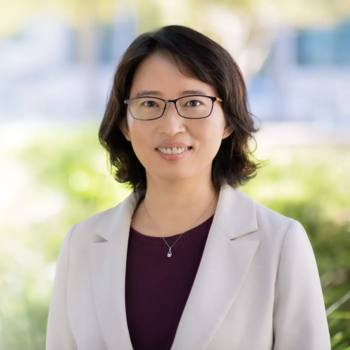
Professor, Department of Epidemiology & Biostatistics
Whether you're exploring the field, enhancing your skills, or working toward a larger academic goal, most individual courses are open to everyone. Current learners enrolled in DEB Education programs have priority in enrollment for this course. Any extra spaces are available to non-DEB Education learners (i.e., those from the Institute for Global Health Sciences, School of Nursing, external groups, etc).
You’ll find details on course fees, how to apply and pay, and the full course schedule on the Course Enrollment & Payment page. Be sure you understand the enrollment policies and payment process before completing the enrollment form.
And remember: you only need to submit one form for all the new courses you want to take.