Image

Fall
3 units
Only one application needs to be completed for all courses desired during the quarter.
09/11/2026
Clinical epidemiology applies the methods of epidemiology to clinical rather than public health decisions. Instead of the causes of disease, this course focuses on how to predict, diagnose, and treat disease.
Diagnostic tests are often used to estimate the probability of a prevalent disease, and risk prediction models are used to evaluate the likelihood of an incident outcome. In this course, we will cover:
Although the tests and models discussed are clinical and the decisions are often treatment decisions, the principles apply to any problem of prediction and decision-making under uncertainty.
The specific objectives of this course are to provide a basic understanding of:
Designing Clinical Research (EPI 202). Exceptions may be made with the consent of the Course Director, space permitting. The course draws heavily upon clinical examples and may be more challenging for students without any clinical background. However, learning how to use clinical information to diagnose disease or predict outcomes and guide treatment decisions is an excellent way to introduce prediction in general.
Each week, new material is introduced via a recorded lecture and recommended readings. After beginning to study the lecture and reading, the class gathers for a large group discussion in which the lecture is briefly reviewed and students have the opportunity to pose questions to course faculty or prompt discussion on any aspect of the material. A problem set is assigned each week. The goal of the problem sets is to reinforce the main points brought forth in lecture as well as to cover more detailed nuances found in the readings. The problem sets are discussed in detail with course faculty in the small group discussion sections at the end of each weekly cycle.
Large Group Discussion: Brief formal review of lecture followed by question-and-answer. Recorded lecture should be viewed prior to this session. The video can played at 0.5 to 2.0x speed.
Small Group Discussion: Overview and discussion of lectures, and review of homework assignments. A detailed answer key will be available online shortly after each session.
Drop-in Help: Course faculty are available to address questions on course content
All course materials and handouts will be posted on the course's online syllabus.
Grading is based equally on homework (including the problem-writing assignment, which counts as one homework) and a take-home final exam. Students will turn in 9 problem sets, a problem-writing assignment, and a final exam. The problem sets are due at the beginning of each Thursday small group session. Except for the first Thursday (9/14), the small-group session will be devoted to reviewing the problem set that students have just turned in. On the first Thursday, we will play the "Kappa Game". You should watch the first lecture, read Chapters 1 and 5 of the textbook, and do Problem Set 0 (not to be turned in) prior to the small group session on 9/12.
Students not in full-year DEB Education Programs who satisfactorily pass all course requirements will, upon request, receive a Certificate of Course Completion.
Only UCSF students (defined as individuals enrolled in UCSF degree or certificate programs) will receive academic credit for courses. Official transcripts are available to UCSF students only. A Certificate of Course Completion will be available upon request to individuals who are not UCSF students and who satisfactorily pass all course requirements.
For UC-Affiliated learners, the course fee is $3,200
For Non-UC-Affiliated learners, the course fee is $3,800
UC-Affiliation: Concurrent enrollment in a University of California-sponsored residency or post-doctoral fellowship program that is recognized by the Office of Graduate Medical Education; or a registered student in one of the professional schools or graduate programs at the University of California (in a program other than the TICR program); or individuals who hold full-time salaried University of California faculty, academic or staff positions. Please note: Individuals will be asked to provide proof of UC status.
The specific objectives of this course are to provide a basic understanding of:
Designing Clinical Research (EPI 202). Exceptions may be made with the consent of the Course Director, space permitting. The course draws heavily upon clinical examples and may be more challenging for students without any clinical background. However, learning how to use clinical information to diagnose disease or predict outcomes and guide treatment decisions is an excellent way to introduce prediction in general.
Each week, new material is introduced via a recorded lecture and recommended readings. After beginning to study the lecture and reading, the class gathers for a large group discussion in which the lecture is briefly reviewed and students have the opportunity to pose questions to course faculty or prompt discussion on any aspect of the material. A problem set is assigned each week. The goal of the problem sets is to reinforce the main points brought forth in lecture as well as to cover more detailed nuances found in the readings. The problem sets are discussed in detail with course faculty in the small group discussion sections at the end of each weekly cycle.
Large Group Discussion: Brief formal review of lecture followed by question-and-answer. Recorded lecture should be viewed prior to this session. The video can played at 0.5 to 2.0x speed.
Small Group Discussion: Overview and discussion of lectures, and review of homework assignments. A detailed answer key will be available online shortly after each session.
Drop-in Help: Course faculty are available to address questions on course content
All course materials and handouts will be posted on the course's online syllabus.
Grading is based equally on homework (including the problem-writing assignment, which counts as one homework) and a take-home final exam. Students will turn in 9 problem sets, a problem-writing assignment, and a final exam. The problem sets are due at the beginning of each Thursday small group session. Except for the first Thursday (9/14), the small-group session will be devoted to reviewing the problem set that students have just turned in. On the first Thursday, we will play the "Kappa Game". You should watch the first lecture, read Chapters 1 and 5 of the textbook, and do Problem Set 0 (not to be turned in) prior to the small group session on 9/12.
Students not in full-year DEB Education Programs who satisfactorily pass all course requirements will, upon request, receive a Certificate of Course Completion.
Only UCSF students (defined as individuals enrolled in UCSF degree or certificate programs) will receive academic credit for courses. Official transcripts are available to UCSF students only. A Certificate of Course Completion will be available upon request to individuals who are not UCSF students and who satisfactorily pass all course requirements.
For UC-Affiliated learners, the course fee is $3,200
For Non-UC-Affiliated learners, the course fee is $3,800
UC-Affiliation: Concurrent enrollment in a University of California-sponsored residency or post-doctoral fellowship program that is recognized by the Office of Graduate Medical Education; or a registered student in one of the professional schools or graduate programs at the University of California (in a program other than the TICR program); or individuals who hold full-time salaried University of California faculty, academic or staff positions. Please note: Individuals will be asked to provide proof of UC status.
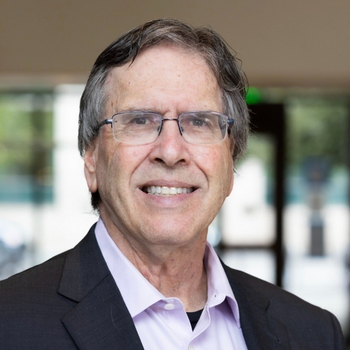
Professor Emeritus, Department of Epidemiology & Biostatistics
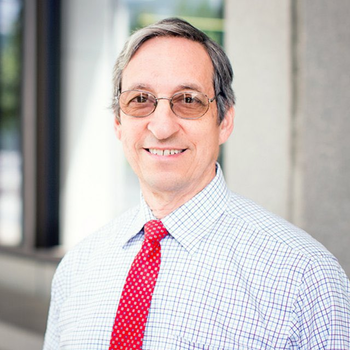
Professor Emeritus, Departments of Epidemiology & Biostatistics and Pediatrics
Whether you're exploring the field, enhancing your skills, or working toward a larger academic goal, most individual courses are open to everyone. Current learners enrolled in DEB Education programs have priority in enrollment for this course. Any extra spaces are available to non-DEB Education learners (i.e., those from the Institute for Global Health Sciences, School of Nursing, external groups, etc).
You’ll find details on course fees, how to apply and pay, and the full course schedule on the Course Enrollment & Payment page. Be sure you understand the enrollment policies and payment process before completing the enrollment form.
And remember: you only need to submit one form for all the new courses you want to take.