Image


Winter
2 units
Only one application needs to be completed for all courses desired during the quarter.
01/19/2027
In-person
Winter
The goal of this course is to equip students with core statistical concepts and methods. In this course students will learn mathematical, computational, statistical and probabilistic background; the basics of probability distributions including the definitions of density functions, cumulative distributions, moments of the distributions; theory and methods for point estimation; and methodology for the construction of hypothesis testing and confidence intervals. R statistical software will be used.
Upon completion of this courses, students will be able to:
Calculus is a prerequisite for this class. For example, students must understand integration and derivatives. A previous or concurrent course in introductory biostatistics is preferred, Biostatistical Methods I (BIOSTAT 200).
Course content will be delivered through weekly interactive lectures. All course materials and handouts will be posted on the course's online syllabus.
None
Only UCSF students (defined as individuals enrolled in UCSF degree or certificate programs) will receive academic credit for courses. Official transcripts are available to UCSF students only. A Certificate of Course Completion will be available upon request to individuals who are not UCSF students and satisfactorily pass all course requirements.
Upon completion of this courses, students will be able to:
Calculus is a prerequisite for this class. For example, students must understand integration and derivatives. A previous or concurrent course in introductory biostatistics is preferred, Biostatistical Methods I (BIOSTAT 200).
Course content will be delivered through weekly interactive lectures. All course materials and handouts will be posted on the course's online syllabus.
None
Only UCSF students (defined as individuals enrolled in UCSF degree or certificate programs) will receive academic credit for courses. Official transcripts are available to UCSF students only. A Certificate of Course Completion will be available upon request to individuals who are not UCSF students and satisfactorily pass all course requirements.
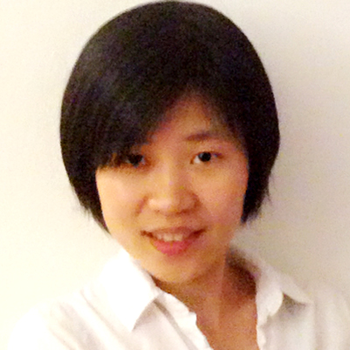
Associate Professor, Department of Epidemiology & Biostatistics
Whether you're exploring the field, enhancing your skills, or working toward a larger academic goal, most individual courses are open to everyone. Current learners enrolled in DEB Education programs have priority in enrollment for this course. Any extra spaces are available to non-DEB Education learners (i.e., those from the Institute for Global Health Sciences, School of Nursing, external groups, etc).
You’ll find details on course fees, how to apply and pay, and the full course schedule on the Course Enrollment & Payment page. Be sure you understand the enrollment policies and payment process before completing the enrollment form.
And remember: you only need to submit one form for all the new courses you want to take.