Image

Summer 2026
3 units
This is an introduction to the opportunities and challenges of using large datasets for biomedical research. Topics to be covered include: What makes big data different? What big data can and cannot do. Phases of data science: getting data, merging and cleaning data, storing and accessing data, visualizing or telling stories with data, drawing conclusions from data. Introduction to supervised and unsupervised machine learning including detailed discussion of algorithms and model fitting.
At the conclusion of this course, students will be able to:
None
Twice-weekly pre-recorded lectures introduce the substantive content for each module, which is subsequently reinforced through weekly applied homework problem sets. Weekly computer lab sessions give students guided problems to work through and the opportunity to learn to use the software, ask questions and have more interaction with faculty.
Lectures: Two lectures per week. Formal review of recorded lecture followed by application of lecture material as well as question and answer discussion.
Computer Laboratories: Once per week. Students have access to course faculty for questions on current or prior curriculum, assignments, and software implementation.
In addition, all students will be required to submit a final project in which they manipulate, clean, and analyze data emanating from a large data source. Students will be given a choice of datasets and guidelines for performing the project.
All course materials and handouts will be posted on the course's online syllabus.
The free software suite Orange will be used throughout. Orange is a comprehensive, component-based software package with strengths in data visualization, data mining and machine learning.
Grades will be based on the Computer Lab assignments and the Final Project. Lab assignments will be due by the start of the lecture the following week. Homework problem sets will account for 70% of the course points. The final project, based on course-supplied datasets, will account for 30% of the points possible for the course.
Students must hand in all homework problem sets (even if late), complete a satisfactory Final Project, and receive at least 80% of the total number of points assigned during the quarter to receive a Satisfactory (if taking Satisfactory/Unsatisfactory) or B (if taking for a letter grade) in the course.
Official UCSF transcripts are not available for individual courses taken within the Department of Epidemiology and Biostatistics. Students not in full-year TICR Programs who satisfactorily pass all course requirements will, upon request, receive a Certificate of Course Completion.
Only UCSF students (defined as individuals enrolled in UCSF degree or certificate programs) will receive academic credit for courses. Official transcripts are available to UCSF students only. A Certificate of Course Completion will be available upon request to individuals who are not UCSF students and who satisfactorily pass all course requirements.
For UC-Affiliated learners, the course fee is $3,200
For Non-UC-Affiliated learners, the course fee is $3,800
UC-Affiliation: Concurrent enrollment in a University of California-sponsored residency or post-doctoral fellowship program that is recognized by the Office of Graduate Medical Education; or a registered student in one of the professional schools or graduate programs at the University of California (in a program other than the TICR program); or individuals who hold full-time salaried University of California faculty, academic or staff positions. Please note: Individuals will be asked to provide proof of UC status.
At the conclusion of this course, students will be able to:
None
Twice-weekly pre-recorded lectures introduce the substantive content for each module, which is subsequently reinforced through weekly applied homework problem sets. Weekly computer lab sessions give students guided problems to work through and the opportunity to learn to use the software, ask questions and have more interaction with faculty.
Lectures: Two lectures per week. Formal review of recorded lecture followed by application of lecture material as well as question and answer discussion.
Computer Laboratories: Once per week. Students have access to course faculty for questions on current or prior curriculum, assignments, and software implementation.
In addition, all students will be required to submit a final project in which they manipulate, clean, and analyze data emanating from a large data source. Students will be given a choice of datasets and guidelines for performing the project.
All course materials and handouts will be posted on the course's online syllabus.
The free software suite Orange will be used throughout. Orange is a comprehensive, component-based software package with strengths in data visualization, data mining and machine learning.
Grades will be based on the Computer Lab assignments and the Final Project. Lab assignments will be due by the start of the lecture the following week. Homework problem sets will account for 70% of the course points. The final project, based on course-supplied datasets, will account for 30% of the points possible for the course.
Students must hand in all homework problem sets (even if late), complete a satisfactory Final Project, and receive at least 80% of the total number of points assigned during the quarter to receive a Satisfactory (if taking Satisfactory/Unsatisfactory) or B (if taking for a letter grade) in the course.
Official UCSF transcripts are not available for individual courses taken within the Department of Epidemiology and Biostatistics. Students not in full-year TICR Programs who satisfactorily pass all course requirements will, upon request, receive a Certificate of Course Completion.
Only UCSF students (defined as individuals enrolled in UCSF degree or certificate programs) will receive academic credit for courses. Official transcripts are available to UCSF students only. A Certificate of Course Completion will be available upon request to individuals who are not UCSF students and who satisfactorily pass all course requirements.
For UC-Affiliated learners, the course fee is $3,200
For Non-UC-Affiliated learners, the course fee is $3,800
UC-Affiliation: Concurrent enrollment in a University of California-sponsored residency or post-doctoral fellowship program that is recognized by the Office of Graduate Medical Education; or a registered student in one of the professional schools or graduate programs at the University of California (in a program other than the TICR program); or individuals who hold full-time salaried University of California faculty, academic or staff positions. Please note: Individuals will be asked to provide proof of UC status.
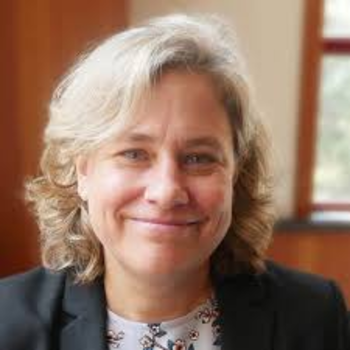
Specialist, Department of Obstetrics, Gynecology & Reproductive Sciences
Whether you're exploring the field, enhancing your skills, or working toward a larger academic goal, most individual courses are open to everyone. Current learners enrolled in DEB Education programs have priority in enrollment for this course. Any extra spaces are available to non-DEB Education learners (i.e., those from the Institute for Global Health Sciences, School of Nursing, external groups, etc).
You’ll find details on course fees, how to apply and pay, and the full course schedule on the Course Enrollment & Payment page. Be sure you understand the enrollment policies and payment process before completing the enrollment form.
And remember: you only need to submit one form for all the new courses you want to take.