Image


Summer
2 units
Vast amounts of health-related data are being generated daily and at an increasing rate. Our ability to extract insights and make the most of these resources depends on the effective and efficient use of computational tools to preprocess, visualize, and analyze different types of data. DATASCI 213 is a programming course which aims to provide hands-on experience in the R language and enable further work in biostatistics, epidemiology, and machine learning/health data science.
At the conclusion of this course, students will be able to:
The aim of the course is to provide a solid understanding of the core R language which allows students to then make use of the extensive collection of R packages available.
No prior programming experience is required.
The class meets in person once a week.
Using an interactive format, the initial portion of the session reviews the prior week's material and exercises. New material is introduced by reviewing code and with a live demonstration in R. Participation is key to maximizing learning for all students. Sessions end with labs where students can work on their weekly assignments, which are due the following Monday.
All course materials and handouts will be posted on the course's online syllabus.
The class has a Discord server where students can engage with each other, the TAs and the instructor.
Final grades will be based on the weekly assignments (60%) and the final project (40%). The final project will be a brief article on your choice of dataset, written in Quarto.
Official UCSF transcripts are not available for individual courses taken within the Department of Epidemiology and Biostatistics. Students not in full-year DEB Education Programs who satisfactorily pass all course requirements will, upon request, receive a Certificate of Course Completion.
Only UCSF students (defined as individuals enrolled in UCSF degree or certificate programs) will receive academic credit for courses. Official transcripts are available to UCSF students only. A Certificate of Course Completion will be available upon request to individuals who are not UCSF students and satisfactorily pass all course requirements.
UCSF Graduate Division Policy on Disabilities
For UC-Affiliated learners, the course fee is $2,100
For Non-UC-Affiliated learners, the course fee is $2,500
UC-Affiliation: Concurrent enrollment in a University of California-sponsored residency or post-doctoral fellowship program that is recognized by the Office of Graduate Medical Education; or a registered student in one of the professional schools or graduate programs at the University of California (in a program other than the TICR program); or individuals who hold full-time salaried University of California faculty, academic or staff positions. Please note: Individuals will be asked to provide proof of UC status.
At the conclusion of this course, students will be able to:
The aim of the course is to provide a solid understanding of the core R language which allows students to then make use of the extensive collection of R packages available.
No prior programming experience is required.
The class meets in person once a week.
Using an interactive format, the initial portion of the session reviews the prior week's material and exercises. New material is introduced by reviewing code and with a live demonstration in R. Participation is key to maximizing learning for all students. Sessions end with labs where students can work on their weekly assignments, which are due the following Monday.
All course materials and handouts will be posted on the course's online syllabus.
The class has a Discord server where students can engage with each other, the TAs and the instructor.
Final grades will be based on the weekly assignments (60%) and the final project (40%). The final project will be a brief article on your choice of dataset, written in Quarto.
Official UCSF transcripts are not available for individual courses taken within the Department of Epidemiology and Biostatistics. Students not in full-year DEB Education Programs who satisfactorily pass all course requirements will, upon request, receive a Certificate of Course Completion.
Only UCSF students (defined as individuals enrolled in UCSF degree or certificate programs) will receive academic credit for courses. Official transcripts are available to UCSF students only. A Certificate of Course Completion will be available upon request to individuals who are not UCSF students and satisfactorily pass all course requirements.
UCSF Graduate Division Policy on Disabilities
For UC-Affiliated learners, the course fee is $2,100
For Non-UC-Affiliated learners, the course fee is $2,500
UC-Affiliation: Concurrent enrollment in a University of California-sponsored residency or post-doctoral fellowship program that is recognized by the Office of Graduate Medical Education; or a registered student in one of the professional schools or graduate programs at the University of California (in a program other than the TICR program); or individuals who hold full-time salaried University of California faculty, academic or staff positions. Please note: Individuals will be asked to provide proof of UC status.
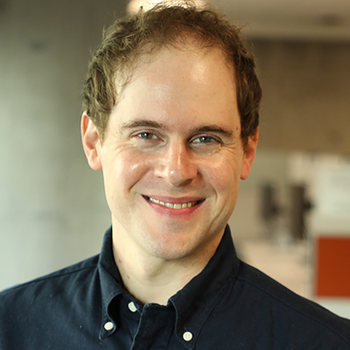
Assistant Professor, Department of Epidemiology & Biostatistics
Whether you're exploring the field, enhancing your skills, or working toward a larger academic goal, most individual courses are open to everyone. Current learners enrolled in DEB Education programs have priority in enrollment for this course. Any extra spaces are available to non-DEB Education learners (i.e., those from the Institute for Global Health Sciences, School of Nursing, external groups, etc).
You’ll find details on course fees, how to apply and pay, and the full course schedule on the Course Enrollment & Payment page. Be sure you understand the enrollment policies and payment process before completing the enrollment form.
And remember: you only need to submit one form for all the new courses you want to take.