Image
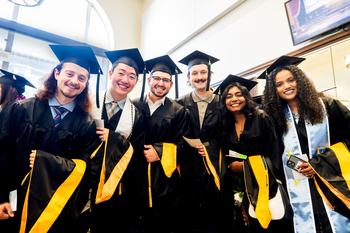

The Master of Science (MS) in Clinical & Epidemiological Research is a two-year program for individuals who wish to master clinical research methods and pursue independent research careers.
Applications open October 1, 2026.
2 years
Hybrid/Campus
In-person
The Master of Science (MS) in Clinical and Epidemiological Research is a two-year program designed for individuals seeking to master clinical research methods and pursue independent research careers.
Through coursework, research, and teaching, students will:
The following qualifications are required:
UCSF does not use race, gender, sex, or other protected categories or proxies for protected categories in the admissions process.
The MS in Clinical and Epidemiological Research welcomes international applicants who meet the program's prerequisites; however, it does not provide direct financial aid to international students. This program is a STEM/OPT eligible degree: 2024 DHS STEM Designated Degree Program List
English Language Proficiency Requirement: Please visit the Graduate Education and Postdoctoral Affairs website for specific guidelines on how this requirement can be met.
Transcripts: Once you have been granted admission to UCSF, any unofficial transcripts you submitted as part of your application from institutions outside of the U.S. must be evaluated by an accredited third-party credential evaluation service. Please see International Admissions Requirements for more details
Visas: Once you have been accepted into the master's program, you are expected to work with UCSF's International Students and Scholars Office (ISSO) to obtain the appropriate visa.
Note: The program begins on July 12, 2027, so travel arrangements should be made to arrive in San Francisco by July 11, 2027.
Applications are reviewed on a rolling basis, and applicants are notified of admission decisions within six weeks of the program receiving a complete application. All application materials, including letters of recommendation and transcripts, must be received for the application to be considered complete. If any portion of the application is missing by the application deadline, the application will be considered incomplete.
Interviews: Select applicants will be interviewed by members of the admissions committee.
Transcripts: Official transcripts from all institutions attended after high school will be required upon acceptance to the program and should be submitted directly to the Office of Graduate Education and Postdoctoral Affairs. E-Transcripts are highly encouraged and can be sent to [email protected]. We do not accept transcripts submitted by the student. Mailing address for hardcopy transcripts is available upon request. International applicants will be required to provide third-party verification of their transcripts.
See our CER Application & Funding page for complete application requirements.
Other information:
Enrollment Deposit
All successful non-UC-affiliated applicants will be required to pay a non-refundable $1,000 deposit to hold their enrollment. This $1,000 will be applied to the total fees upon enrollment.
Fees
The 2026-2027 annual fees per year of the Master's program are $34,233. The Master's program requires enrollment for at least 7 quarters (4 quarters in Year 1, starting in Summer, 3 quarters in Year 2, starting in Fall). Please visit our fees page for a detailed outline of assessed fees.
Financial Assistance
Prospective students should contact the UCSF Financial Aid office for more information.
Master's students are required to complete 38 units of coursework. Core course units make up 30.5 units. Students receive 2 units of credit for their educational apprenticeship rotation. Students can take electives that align with their interests to meet the 38-unit requirement.
View Curriculum Explore Research Tracks
The Master of Science (MS) program is designed to be completed in two academic years. Most trainees are able to complete all requirements within seven academic quarters, although occasionally students take extra time to complete their original research.
The majority of our learners hold additional part-time positions in addition to being enrolled full-time in our program, so the program provides as much flexibility as possible. We record the vast majority of lectures, which learners can view at their convenience.
In-person attendance is required only for select core courses. Attendance at all other lectures/sessions, although strongly encouraged for maximizing learning, content retention, and building community, is not required.
For admissions-related questions, please email [email protected]
For current students or general program-related questions, please email [email protected] and Clair Dunne, Program Coordinator.
To sign up for our mailing list, visit the TICR Hub.
At least 38 quarter-units of coursework are needed for graduation. Students will take the majority of their coursework in the first year allowing for focus on performing and publishing original research in the second year with faculty support.
In-person attendance is required only for select core courses (Designing Clinical Research and our Seminar series on Tuesday afternoons). Some courses may hold in-person exams that would require attendance. Attendance at all other lectures/sessions, although strongly encouraged for maximizing learning, content retention, and building community, is not required.
Comprehensive literature review: Students complete a comprehensive review and critique of the literature pertinent to a specific research question.
Conference presentation: Students must present their original research at a national or international scientific meeting.
Journal submission: Students will submit their research to a peer-reviewed scientific journal as the first author.
Experience in the instruction of clinical research methods as an educational apprentice for one course.
Graduate students must maintain a cumulative grade point average of 3.00 (B) and must make satisfactory progress toward the degree as defined by the program. Students who fail to maintain a 3.00 grade point average or fail to make satisfactory progress toward the degree are subject to dismissal by the Dean of the Graduate Division after consultation with the faculty of the degree program.

Our two-year Master's program is perfect for learners:
Upon completion of the program, graduates receive a Master of Science in Clinical and Epidemiological Research from UCSF. Graduates are poised to work in a variety of research settings, including universities, public health departments, foundations and private industry. (Note: The program does not provide instruction in laboratory investigation and is not intended for scholars who envision themselves working primarily in a wet laboratory.) Additionally, the master's degree can potentially strengthen applications to PhD, resident or medical school.

I wanted to become fluent and self-sufficient in the entire life cycle of a clinical research project, from forming a research question, designing a study protocol, building a database, collecting data, interpreting the data, and finally disseminating the results via national conferences and peer-reviewed publications. The TICR MAS program helped me achieve this and more.

As an international student who began with only surface-level knowledge and no publications, the combination of mentorship and the independence I gained through coursework and final projects enabled me to present at prestigious national and international conferences and to publish three first-author articles (with several more under review) by the end of my second year.
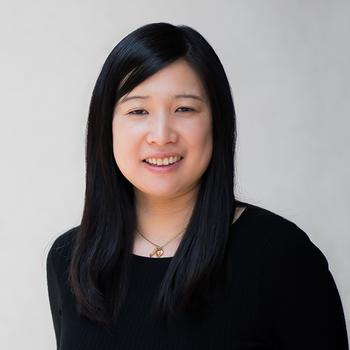
Program Director
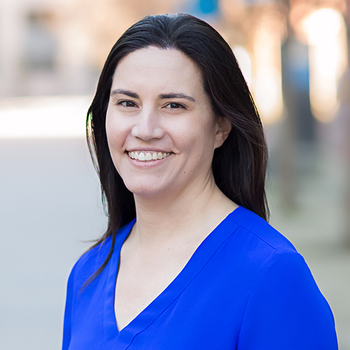
Faculty Lead

Each year, we award faculty and students with the:

Want to learn more about life, community, and student resources at UCSF? Explore below and visit the Student Success Center for information.
Clinical research is broadly defined as health-related research where people, as individuals or in groups, are the objects of observation. It includes patient-oriented, translational, epidemiologic, comparative effectiveness, behavioral, outcomes or health services research.
Clinical research aims to improve human health by identifying strategies to prevent disease and improve care for patients with diagnosed illnesses. Clinical researchers usually define an area of focus with respect to diseases (examples include breast cancer, heart disease, HIV, or malaria) and affected populations (examples include research focusing on children, older adults, minority populations, or urban communities). Researchers focus on many different influences on health including genetic and physiologic risk factors, individual-level behavior, social and environmental determinants, health care access and quality, drugs and devices. The basic methods that clinical researchers use in their work are those of epidemiology, experimental study design, and biostatistics.
Of note, clinical research is typically not primarily performed in a basic science laboratory via characterization of genes, molecules and cells. Rather, it is performed with individual humans or groups of humans as the unit of observation; computers and software are the major technological tools. The products of basic science laboratories are often used as measurements in clinical research but the initial identification of a gene or molecule is typically in the purview of basic science rather than clinical research. Some recent examples of clinical research studies completed in this MS program include:
The critical difference between our MS program (a graduate program) and an MPH program (a professional program) is that our MS and ATCR programs are focused on the design and conduct of independent and original research. In contrast, an MPH program is devoted to training public health practitioners. Specifically, MPH programs provide a broad overview of environmental health, health administration, epidemiology and biostatistics. The last two domains are essential tools shared by the MS/ATCR Programs and the MPH. However, the MS program focuses on epidemiology and biostatistics, which are most pertinent to clinical researchers (and not on environmental health or health administration). Furthermore, our programs offer many courses often not found in MPH programs but are specific to the conduct of clinical research (Designing Clinical Research, Clinical Epidemiology, and Clinical Trials are just a few examples) and provide opportunities to learn the backbone of clinical informatics, data science and implementation science.
Yes. Prior substantive knowledge or experience in a health-related field (e.g., breast cancer, HIV, substance abuse, or exercise promotion), obtained from formal education, volunteering or employment, can help in identifying a research area of interest and demonstrate commitment to health research. As such, preference during the admissions process will be given to scholars who have demonstrated knowledge or experience in some aspect of a health-related field (e.g., clinical practice, public health, health promotion, or research) by virtue of either possession of a graduate or professional doctoral degree (MD, DDS, PharmD, PhD or international equivalent), being currently enrolled in such a program, or relevant work or volunteer experience. This prior knowledge or experience is preferred because, as noted above, Master’s students must perform original research in a subject matter area of their choosing to fulfill graduation requirements.
Program graduates are poised to work in a variety of research settings, including universities, public health departments, foundations, and private industry. Regardless of setting, the program strives to train individuals who will become leaders of research efforts and teams. The great majority of our graduates are employed in university settings in some aspect of clinical research. The program can be completed as a stand-alone experience, but it also provides a springboard for students considering advanced degree programs, such as an MD or PhD (e.g., the UCSF PhD Program in Epidemiology and Translational Science). Because our graduates must both present their research at national scientific meetings and publish their findings in biomedical journals, they have built academic records that should make them more competitive when applying for subsequent MD or PhD programs.
Combining an MS in Clinical and Epidemiological Research with a professional degree will help train you to be a health sciences leader, generate impactful knowledge, and have the skills to be successful during professional training and beyond.
Students currently enrolled in a professional degree program (e.g., MD, PharmD, or DDS) can combine their professional degree with a UCSF MS in Clinical and Epidemiological Research, often with only 1 additional year of study.
Visit the Dual Degree Programs page