Image

Our PhD program is a four- to five-year course of study for individuals who wish to pursue independent research careers in epidemiology and translational science
Applications for the PhD program are open. Please submit your application by 11:59 p.m. PT on Dec. 1, 2026.
12/01/2026
4-5 years
Campus
In-person
The PhD program in Epidemiology and Translational Science, a collaboration between the Department of Epidemiology and Biostatistics and UCSF’s renowned Clinical and Translational Sciences Institute, offers high-caliber training in core skills of epidemiologic and biostatistical methods along with practical research rotations that enhance classroom training.
Epidemiology serves as a key discipline in team science and in problem-based learning. We view the use of epidemiology in translational science as a critical perspective and set of research methods that will move basic scientific discoveries to practical clinical applications and dissemination of new basic and clinical knowledge to population health settings. A central goal is to take advantage of the highly interdisciplinary nature of UCSF and to adopt a transdisciplinary approach to graduate education.
The PhD program is a four- to five-year course of study for individuals who wish to pursue independent research careers in epidemiology and translational science and who have already completed training at the master's level in epidemiology, public health or a related field. Learners without a master's degree may want to consider our Master's Degree in Clinical & Epidemiological Research.
We especially encourage applications from students interested in our 17 areas of concentration with particular research depth at UCSF.
Explore our research concentrations
Application & Admission (Year 0):
Program (Years 1-5):
See our PhD Application & Funding page for more details on applicant qualifications.
Applications for the program typically open in September and close on December 1st of the year prior to the intended start date (i.e. apply by Dec 1, 2026, for a program start in 2027).
The following application materials must be submitted to the UCSF Division of Graduate Education and Postdoctoral Affairs online application:
See our PhD Application & Funding page for more details on application materials.
For admissions-related questions, please email [email protected]
For program-related questions, please email [email protected]
To sign up for our mailing list, visit the ETS Hub.
Application & Admission (Year 0):
Program (Years 1-5):
See our PhD Application & Funding page for more details on applicant qualifications.
Applications for the program typically open in September and close on December 1st of the year prior to the intended start date (i.e. apply by Dec 1, 2026, for a program start in 2027).
The following application materials must be submitted to the UCSF Division of Graduate Education and Postdoctoral Affairs online application:
See our PhD Application & Funding page for more details on application materials.
For admissions-related questions, please email [email protected]
For program-related questions, please email [email protected]
To sign up for our mailing list, visit the ETS Hub.
PhD students are required to spend six quarters in residence and generally to take 8-12 units per quarter. Applicants can take advantage of UCSF’s strengths in biomedical and clinical research as part of our transdisciplinary approach to training and research.
Students are expected to develop expertise in epidemiologic theory and methods, biostatistics and a third area (i.e., not epidemiology or biostatistics) designated by the student that is relevant to their research interests (e.g., demography, anthropology, oncology, behavioral science, virology). To accomplish this, doctoral students will take a series of advanced doctoral level courses during their first two years in the PhD program.
A student, in consultation with their advisor(s), decides which thematic area to follow and which courses to take. Doctoral students will generally take courses offered in the School of Medicine and other UCSF professional schools. Course opportunities also exist at UC Berkeley and Stanford.
View a sample 4-year plan of study on our curriculum page.
Research Team Rotations provide extensive specialized experiential training with a specific deliverable (e.g., survey instrument, statistical plan, manuscript) which differentiates them from independent studies.
Students are required to complete two quarters of Research Team Rotations (four units each), similar to the Lab Rotation requirement in other established PhD Programs at UCSF (e.g., BMS, BMI and PSPG). The objectives of these Research Team Rotations are for students to have the opportunity to:
Research Team Rotations insert students into active research teams at UCSF or affiliated institutions. Rotations outside of UCSF affiliates may be appropriate based on the student's goals and research interests, provided appropriate mentorship is available. Students are apprenticed under a specific member of the research team (the Rotation Director), who manages and is responsible for their experience. The goal for the Rotation Director is to provide author-level involvement (i.e., participation in research at a level justifying future inclusion as an author on a subsequent publication) for the student, and to help define this involvement such that, at the end of the rotation, the student is expected to have produced a specific deliverable.
Students are required to participate in one educational apprenticeship (EA) in a DEB course. This experience must be complete before the student may advance to candidacy, typically completed in year two of the program. In most cases, students serve as an EA in a course they completed in the first second year. EAs help further students’ skills in specific areas under the tutelage of experienced faculty, which in turn prepares them for future educational roles, including as faculty.
After completing required coursework, students prepare for and complete their qualifying examination in order to advance to candidacy. The qualifying examination has two parts: 1) a "Core” section that will assess mastery of core epidemiologic methods, and 2) a dissertation prospectus and oral defense.
Per the UCSF Graduate Division, the purpose of the academic doctoral program is to prepare students to be professional in, and contribute to, their discipline. There are two key benchmarks en route to the doctoral degree. The first is to pass the qualifying examination. The second is to successfully complete the dissertation.
The objective of the qualifying examination is twofold: first is to determine that the student is able to undertake the work of the dissertation, and second is to assess the student’s mastery of the factual information, the theoretical concepts, and the methodological approaches in their field.
The qualifying examination provides evidence that the student is able to:
The dissertation is the final and most important step in a program for the doctoral degree. It should be a work of independent research, which makes an original contribution to knowledge in the student’s academic discipline and should be of sufficient depth and quality to be published. Analyses for dissertation work should not have begun prior to the formation of the Dissertation Committee.
The goal for the dissertation is to have students conduct original epidemiologic/translational research that will produce publishable results. Students are strongly encouraged to carry out primary data collection for at least one component of their dissertation research or seek involvement in a primary data collection initiative via a research rotation. Students are expected to have had experience in all of the key phases of epidemiologic research (e.g., conceptualization of the question; critical review of the existing literature; preparation of a grant proposal; collection, management, and analysis of epidemiologic data; and writing of one or more manuscripts for publication) and students will have been tested on these essentials in their qualifying examinations.
Given the approval of their Dissertation Committee, doctoral candidates will produce three (or more) publishable first authored articles based on their doctoral student research. If one or more of these papers has already been published before the dissertation is filed, the Graduate Division requires that all co-authors of the paper give written permission for the paper to be submitted as part of the dissertation. Research completed and scientific papers written before the student has entered the doctoral program cannot be used as a part of the PhD dissertation under any circumstances.
The policy regarding satisfactory academic progress in the Epidemiology and Translational Science PhD program is as follows:
First- and second-year students meet with their graduate advisers once a quarter. Student progress is assessed at the end of the year based on course grades and rotation reports, along with additional comments from course directors and advisers about students who might be struggling.
Second-year students who have completed all required coursework and have a cumulative GPA of 3.0, are eligible to take and must pass a two-part qualifying examination (QE) starting in June (at the end of spring quarter). Part I of the QE will assess mastery of core epidemiological methods, and Part II will establish a level of expertise related to the student’s area of concentration. Part I of the QE is taken over one day with six testing hours at a computer with no internet connection or other resources and covers the following competencies:
Students who pass Part I of the QE may then take Part II, which consists of topic-specific expertise questions prepared by the student’s QE committee. Students may start Part II of the exam at any point within three months of successfully completing Part I of the QE, and will have two weeks to complete the open-book, take-home, four-question exam. The chair of the QE committee shall report the results of the qualifying exam, upon successful (passing-grade) completion of Parts I and II, to the Graduate Division via the Admission to Candidacy form. Provided that the student’s QE results have been confirmed by the graduate admissions dean and that all requirements have been met, the student may then advance to PhD candidacy. Students who do not pass the qualifying exam may retake the exam the following year.
Third-Year Students and Beyond
Students will select a dissertation adviser and nominate faculty for the dissertation committee consisting of at least three faculty Academic Senate members within one academic year of passing their qualifying exam. The goal of the dissertation is for the PhD candidate to have conducted original epidemiologic/translational research that will produce publishable results. With dissertation committee oversight, the doctoral candidate is required to produce three (or more) publishable first-authored articles subject to the approval of the dissertation committee. The student should expect to meet with the committee, at a minimum, once for each paper (a minimum of three times for a three-paper dissertation format). At least one paper should be submitted to a peer-reviewed journal by the time of dissertation completion. The role of the dissertation committee and the research adviser (committee chair) is to oversee the development of the dissertation. The dissertation committee supports students with feedback and guidance throughout the process with the most interaction expected to be between the student and adviser/committee chair. In addition to completing the dissertation, students are expected to complete all PhD degree requirements within two years of having completed the qualifying exam.
Unsatisfactory progress indicators include the following:
Students whose progress is unsatisfactory (according to one or more of the criteria listed above) will be notified and will meet with the adviser and the program director to develop an individualized remediation plan to address the deficiencies. This meeting results in a memorandum of understanding that clearly outlines specific steps and associated deadlines that the student must fulfill in order to receive a satisfactory report. The report is then signed by the following parties: the student, the PhD dissertation adviser (or graduate adviser if no PhD thesis advisor has been chosen) and the program director. At this point, the report is filed in the student’s academic file within the program and the assistant dean for graduate programs is notified.
Should a student be unable to fulfill the expectations according to the timeline outlined in the letter, the student will be subject to dismissal from the program. The process for in-depth review of a student’s eligibility for dismissal will follow the UCSF Divisional Procedure for Student Grievance in Academic Affairs, section 4.0, and will be conducted by the following in-depth ETS PhD Program Ad-hoc Committee:
The PhD Program is a four- to five-year course of study. The total amount of time will depend on a particular student’s program and rate of progression. Student tuition and fees for the PhD program are posted by the Office of the Registrar and are subject to change without notice. Fees do not cover books, software, housing or personal costs. Students admitted to the Epidemiology and Translational Science PhD program are offered a funding package that covers tuition and fees and provides a stipend for living expenses.
We utilize a mix of funding via work as a graduate student researcher (no more than 20 hours/week) on faculty grants, training grants, fellowships, and independent grants. Explore our two T32 grant opportunities below.
See our PhD Application & Funding page for more details on funding.
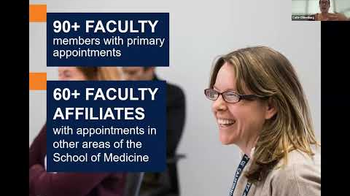
You'll join a small, supportive cohort of about six students, with 35 to 40 PhD students in the program at any time. Your funding may come from UCSF fellowships, dissertation grants, or work on faculty research projects, and we'll help you identify the best opportunities. Since our first cohort in 2010, our graduates have gone on to thrive in academic, government, nonprofit, and industry roles.
With a select group of students admitted each year, the program offers personalized support tailored to your professional goals and background.
You'll be prepared to lead change in clinical practice and public health as part of the next generation of epidemiologists and translational scientists.

One of the best things about being a student at UCSF is the incredible network of faculty who are eager to mentor students. This collaborative environment includes experts in diverse health sciences fields, which provides unmatched opportunities for learning and innovation.
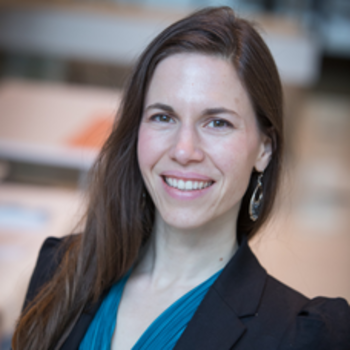
Associate Professor
Primary Research Focus
The role of policies, families, and community social networks in shaping population health and health inequities, particularly in mid and late-life.
Previously Advised

Associate Professor
Primary Research Focus
Biomedical informatics and HIV clinical and behavioral research to address health disparities among underserved communities and create a Learning Health System that is responsive to vulnerable populations.
Previously Advised

Professor
Primary Research Focus
The role of structural and social drivers of health in producing inequities and disparities in cancer and other health outcomes.
Previously Advised
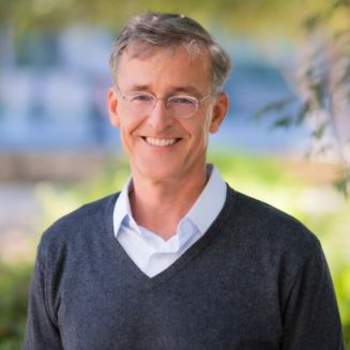
Department Chair, Professor
Primary Research Focus
Informing clinical decision-making and policy relevant to primary care and prevention.
Recently Advised
The application period opens in September and closes December 1st, 11:59 PM PT for the beginning of the program in the Fall quarter of the following year.
We aim to build cohorts of about six PhD students, with 35-40 PhD students in the program at any given time. Admissions statistics may be viewed on the Graduate Division PhD Program Statistics page.
No, the PhD program is an in-person four- to five-year course of study.
Our admissions criteria are outlined on the application page. Candidates without a master's degree may want to consider our Master’s Degree in Clinical and Epidemiological Research.
If you completed coursework/degrees outside of the United States, you must submit transcripts translated into English. Additionally, if your university does not issue grades in a 4.0 grade point scale, you will need to convert your grades for the application.
International applicants from non-English speaking countries must also demonstrate proficiency in English. There are several ways to demonstrate proficiency which the Graduate Division outlines.
Applicants are welcome to individually reach out to potential faculty mentors to determine whether they are taking new students. Applicants invited to interview during the admissions process will also have an opportunity to meet with prospective mentors. The Department of Epidemiology & Biostatistics (DEB) faculty directory allows one to find faculty by name, keyword, or research area.
It is possible to select faculty mentors from other departments. In these cases, we'll also identify a DEB co-mentor.
Students admitted to the Epidemiology and Translational Science PhD program are offered a funding package to cover tuition and fees, and a stipend for living expenses.
We utilize a mix of funding via work as a graduate student researcher (no more than 20 hours/week) on faculty grants, training grants, fellowships, and independent grants. Our goal is to foster as much independent funding as possible. We expect students to work with the program to identify opportunities and pursue grants appropriate for their training and interests. We also nominate students for any appropriate competitive fellowships.