
Overview
The UCSF Department of Epidemiology and Biostatistics offers a yearly series of four short-course modules, as part of the program entitled Training in Reproducible Research on Aging for Social Science and Epidemiology (TRASE). TRASE aims to improve the reproducibility of research on health disparities and aging. The program will offer four short-courses (each can be taken independently) that cover different aspects of reproducible research, from conceptual to technical. The modules are designed for researchers and consumers of scientific research who want to learn how to evaluate, implement, collect, and integrate evidence in a transparent and rigorous way.
The modules are short (~3 days) and intensive, combining lectures (recorded or in-person), interactive activities, and hands-on exercises. Participants can choose to attend one or more modules depending on their needs and interests. The TRASE program leverages the expertise and experience of the UCSF faculty and staff who have successfully developed and delivered other training programs in this field.
Funding
National Institute of Aging/National Institutes of Health R25AG078149
Cost
These courses are free of charge and made possible by the credited NIA/NIH funding source.
Reasonable Accommodation
UCSF welcomes everyone, including people with disabilities, to our events. To request reasonable accommodations for any of these courses, please email [email protected] as soon as possible.
The yearly roster includes the following modules:
Module 1
Introduction to Reproducibility - Core Concepts
February
Module 2
Reproducible Research Skills for Primary Data Collection in Social and Behavioral Research on Aging
March
Module 3
Data Analysis Skills for Reproducible Social and Behavioral Research on Aging
April
Module 4
Reproducible Research Skills for Evidence Synthesis
October
TRASE Module & Registration Details
REGISTRATION CLOSED
Course Instructors
- Anusha M. Vable, ScD, MPH, Associate Professor, School of Public Health, Washington University in St. Louis
- Lucia Pacca, PhD, Research Data Analyst, Department of Epidemiology and Biostatistics, UCSF
Teaching Assistants
- Amanda Irish, DVM, MPH, PhD, Statistical Analyst, School of Public Health, Washington University in St. Louis
- Jilly Hebert, MS, Statistical Analyst, School of Public Health, Washington University in St. Louis
Course Description
This short-course module is intended to have broad reach to introduce the reproducibility crisis, define key terms, and provide tangible solutions to help address the reproducibility crisis. The key ideas relate to the impact of lack of reproducibility on scientific progress; major sources of lack of reproducibility; and types of solutions. The curriculum will draw on examples and challenges in social and behavioral research. We will read published papers and try to complete an Open Science Framework (OSF) analysis plan from a published work to help demonstrate the level of detail that is needed for reproducibility and to gain familiarity with the OSF template to facilitate more regular future use.
Featured Speakers
- Jade Benjamin-Chung, PhD, MPH, Assistant Professor in Epidemiology & Population Health at Stanford University
- Scott C. Zimmerman, MPH, Senior Research Fellow, Boston University
Prerequisite skills
None. The applied project will be broadly applicable to consumers and producers of research; producers of research may have more future uses.
Class Dates in February 2026 from 11:00 a.m.-1:00 p.m. Pacific
Wednesday February 25
Thursday February 26
Friday February 27
Participation Format
Zoom only.
REGISTRATION CLOSED
Course Instructors
- Nadia Diamond-Smith, PhD, MS, Associate Professor, Epidemiology & Biostatistics
- Jacqueline Torres, PhD, MA, MPH, Associate Professor, Epidemiology & Biostatistics
Teaching Assistant
- Lucía Abascal Miguel, MD, PhD, Postdoctoral Scholar, Global Health Sciences
Course Description
This short-course module is designed for people engaged in or planning to conduct primary data collection and should be taken as a full course (all lectures attended). It will consist of case studies and discussions about the applicability (or not!) of reproducibility, replicability and transparency for primary data collection. Topics include measurement, validation, implementation, interviewer fidelity, protocols/documentation, qualitative methods, and social media studies.
Prerequisite skills
Designed for people engaged in or planning to conduct primary data collection.
Class dates & times in March 2026
TBD
Participation Format
Zoom only.
REGISTRATION IS CLOSED
Course Instructors
- Fei Jiang, PhD, MS, Associate Professor, Epidemiology & Biostatistics, UCSF
- Aaron Scheffler, PhD, MS, Assistant Professor, Epidemiology & Biostatistics, UCSF
Teaching Assistant
Jingxuan Wang, PhD, MPhil, Postdoctoral Research Fellow, Epidemiology, Harvard T.H. Chan School of Public Health
Course Description
Concerns around bias and mistakes have been central to the reproducible research movement. Bias includes employing inappropriate statistical methods, model misspecification, and unintentional P-hacking. Mistakes include errors in computer coding. For research reproducibility, the entire research pipeline from formulating a research question to data acquisition, preparation, and analysis to dissemination of data and code should be designed to mitigate the potential for human bias and mistakes. Topics include reproducible programming (github, Rmarkdown), quality control techniques (code review), adjusting for multiple comparisons, honest characterization of uncertainty (confidence intervals, bootstrapping, and cross validation), and methods for power and sample size calculations.
Prerequisite skills
For lectures, participants are expected to be familiar with basic statistical concepts (hypothesis testing, confidence intervals, multiple linear regression). For computer labs, participants are expected to execute R code and install packages.
Class Dates in April 2026 from 2:00 p.m. to 3:30 p.m. Pacific
- Monday April 20
- Tuesday April 21
- Wednesday April 22
Participation Format
Zoom only.
Registration will open soon
Course Instructor
Dave V. Glidden, PhD, Professor, Epidemiology & Biostatistics, UCSF
Teaching Assistant
Cozie Gwaikolo, MD, MAS, PhD Student, Epidemiology & Biostatistics, UCSF
Course Description
This module provides essential tools for evaluating and integrating scientific evidence through systematic reviews and meta-analyses. It is designed for graduate students, postdoctoral fellows, clinicians in training, research staff, early career faculty, and science communicators with at least one year of graduate-level research training or equivalent experience.
Students will learn how to conduct systematic reviews and meta-analyses, understand the strengths and limitations of different study designs and data sources, and critically assess the assumptions underlying causal inferences. The course emphasizes methods to detect and address publication bias, evaluate treatment effect heterogeneity, and triangulate evidence to strengthen scientific conclusions. Additionally, it provides guidance on interpreting statistical findings, such as confidence intervals and p-values, and explores the role of pre-registration and reproducibility in research.
Learning Objectives
- Develop Reproducible skills for systematic reviews and meta-analysis
- Evaluate the quality and reproducibility of evidence across studies.
- Identify and test key assumptions through evidence triangulation.
- Understand and communicate statistical uncertainty and methodological limitations.
- Propose new research directions to fill critical gaps in the evidence base.
Prerequisite skills
None
Class Dates in October 2026 from times Pacific TBD
TBD
Participation Format
Zoom only
Program Directors
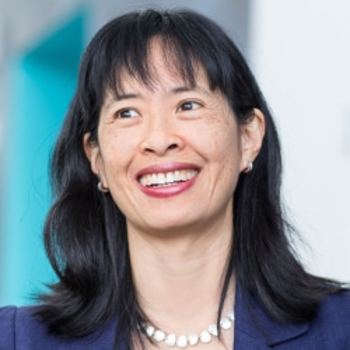
June Maylin Chan, DSc
Professor & Vice Chair of Education, Department of Epidemiology & Biostatistics
Professor, Department of Urology

Maria Glymour, ScD, MS
Professor (affiliate), Department of Epidemiology & Biostatistics, UCSF
Professor & Chair, Department of Epidemiology, Boston University
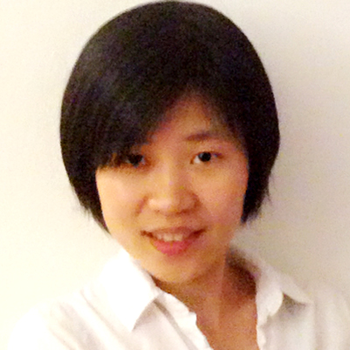
Fei Jiang, PhD, MS
Associate Professor, Department of Epidemiology & Biostatistics
Receive updates about our free modules!
Please bookmark this webpage and join the TRASE LISTSERV for updates on modules and open registration dates!